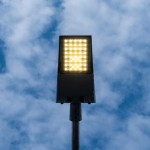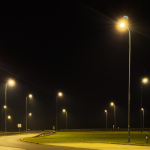

Urban lighting is evolving from a basic public service into a key element of smart city infrastructure. As cities face increasing pressure to reduce energy consumption, improve operational efficiency and meet sustainability targets, traditional lighting systems are no longer sufficient. The shift towards smart street lighting, supported by telemanagement technologies, is redefining how municipalities manage and optimise their infrastructure.
To know more about these changes, keep reading.
From static networks to connected systems
Conventional public lighting systems typically operate on fixed schedules and rely on manual intervention for monitoring, adjustments, and maintenance. This model limits the ability to optimise energy use, slows down incident detection, and ultimately increases operational costs.
Telemanagement introduces a connected layer that enables municipalities to manage each lighting point individually or in groups, adapting dimming levels, timing and operating profiles to real demand. As a result, the network shifts from a static set of luminaires to a flexible, measurable infrastructure designed for efficiency.
This evolution positions public lighting as a managed asset within the urban ecosystem: it generates actionable data, supports better decision-making, and improves service performance over time—aligning technical outcomes with sustainability goals and the quality of public space.
Real-time control and operational efficiency
One of the main advantages of telemanagement is the ability to monitor and control installations remotely, which enables:
- Real-time fault detection
- Remote switching and dimming
- Immediate response to incidents
Studies indicate that maintenance costs can be reduced by up to 30% when remote monitoring systems are implemented, due to faster interventions and reduced field operations.
In addition, the possibility to adjust lighting levels depending on time schedules or activity patterns allows municipalities to optimise energy consumption without affecting safety.
Energy savings through adaptive lighting
Smart lighting systems make it possible to adopt truly adaptive operating strategies based on real usage conditions. Instead of keeping luminaires at full output throughout the night, light levels can be reduced during low-traffic periods and fine-tuned according to environmental factors—maintaining safety and visual comfort while eliminating unnecessary consumption.
When this approach is combined with LED technology, total energy savings can reach up to 70–80% compared to conventional installations, depending on the starting point and the characteristics of the existing infrastructure. For municipalities, telemanagement therefore becomes a key lever to meet energy-efficiency targets with results that are both measurable and scalable.
Data as a tool for decision-making
Beyond operational improvements, smart lighting systems generate valuable data. This information can be used to:
- Analyse consumption patterns
- Identify inefficiencies
- Plan maintenance and future upgrades
The availability of this information allows municipalities to move towards a more strategic and data-driven approach, improving both short-term performance and long-term planning.
Integration within smart city strategies
Smart street lighting is often one of the first steps in broader smart city initiatives. As it is known, lighting infrastructure can act as a platform to integrate additional technologies, such as:
- Environmental sensors
- Traffic monitoring systems
- Connectivity solutions
This multifunctional approach maximises the value of existing infrastructure and supports the development of more connected and efficient urban environments.
Telemanagement is redefining public lighting by transforming it into an intelligent, connected, and adaptable system. With real-time control, energy optimisation, and data integration, municipalities can improve operational efficiency, reduce energy and maintenance costs, enhance service reliability, and support broader smart city strategies. Smart street lighting is no longer a future concept—it is a practical, scalable solution for modern urban management.
At Asvitae we help municipalities implement smart lighting solutions with measurable savings. Contact us to assess your project.