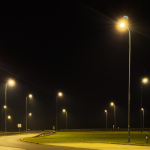

Public lighting infrastructure in many cities still relies on traditional technologies such as high-pressure sodium or metal halide lamps. While these systems have been widely used for decades, they no longer meet the efficiency, control and sustainability requirements that modern urban environments demand.
The comparison between traditional lighting and LED solutions is no longer only technical—it is fundamentally economic and strategic. Keep reading to know more!
Understanding the limitations of traditional lighting
When talking about conventional lighting systems, these were designed for a different context where energy costs were lower and control systems were limited.
Typically, these technologies present the following characteristics:
- High energy consumption
- Shorter lifespan
- Limited control over light output
- Reactive maintenance requirements
In many cases, installations operate continuously at full power, regardless of actual need, leading to unnecessary energy use.
LED technology: efficiency and performance
LED lighting represents a significant evolution in both performance and efficiency, and when compared to traditional systems, LED solutions offer:
- Energy savings typically ranging from 30% to 70% depending on the installation
- Lifespan up to 2 to 4 times longer than conventional lamps
- Improved light quality and uniformity
- Instant switching and dimming capabilities
These characteristics not only reduce energy consumption but also improve the overall quality of urban lighting.
Total cost of ownership: beyond initial investment
One of the key aspects in the transition to LED is understanding the total cost of ownership (TCO). While initial investment may be higher, long-term savings are driven by:
- Reduced energy consumption
- Lower maintenance and replacement costs
- Decreased operational interventions
According to multiple European energy efficiency programmes, payback periods for LED street lighting projects typically range between 3 and 6 years, depending on the scale and existing infrastructure. This makes LED adoption not only viable, but economically justified.
The role of control systems in maximising efficiency
Unlike traditional installations, the full potential of LED lighting is achieved when combined with smart control systems. Therefore, LED luminaires can be dimmed according to schedules, adjusted based on traffic or environmental conditions, and integrated into telemanagement platforms.
This enables cities to move from static lighting models to adaptive and optimised systems, further increasing energy savings and operational efficiency.
Environmental and regulatory considerations
The transition to LED is closely aligned with today’s regulatory and sustainability frameworks. By reducing energy consumption in public lighting, municipalities can directly lower carbon emissions, strengthen compliance with European energy directives, and support the achievement of climate targets at both local and national levels.
In this context, lighting is no longer just a technical service—it becomes a strategic lever within broader environmental and decarbonisation policies.
The comparison between LED and traditional lighting highlights a broader shift in how municipalities approach urban infrastructure. LED solutions—especially when combined with intelligent control systems—deliver substantial energy savings, reduce total cost of ownership, and provide higher performance with greater operational flexibility, while supporting sustainability objectives.
For local authorities, the transition is no longer a question of if, but when—and, above all, how to implement it strategically to maximise long-term value. At Asvitae we help municipalities plan and deliver this transition—from technical assessment to LED and smart control implementation.